This fall, the Massachusetts Library System (MLS) is hosting four MLS Member Webinars! MLS member library staff will share their knowledge and expertise about their selected topics for their fellow library colleagues.
This season, we’re spotlighting the presenters by sharing how their backgrounds connect to their chosen topics.
In today’s blog, learn more about storytelling and Substack from Jeremiah Rood, head of borrower services for the Greenfield Public Library.
Be sure to also register for Jeremiah’s webinar: Your Library Needs a Substack.
What is your name and position, the name of your library, and the community/communities your library serves?
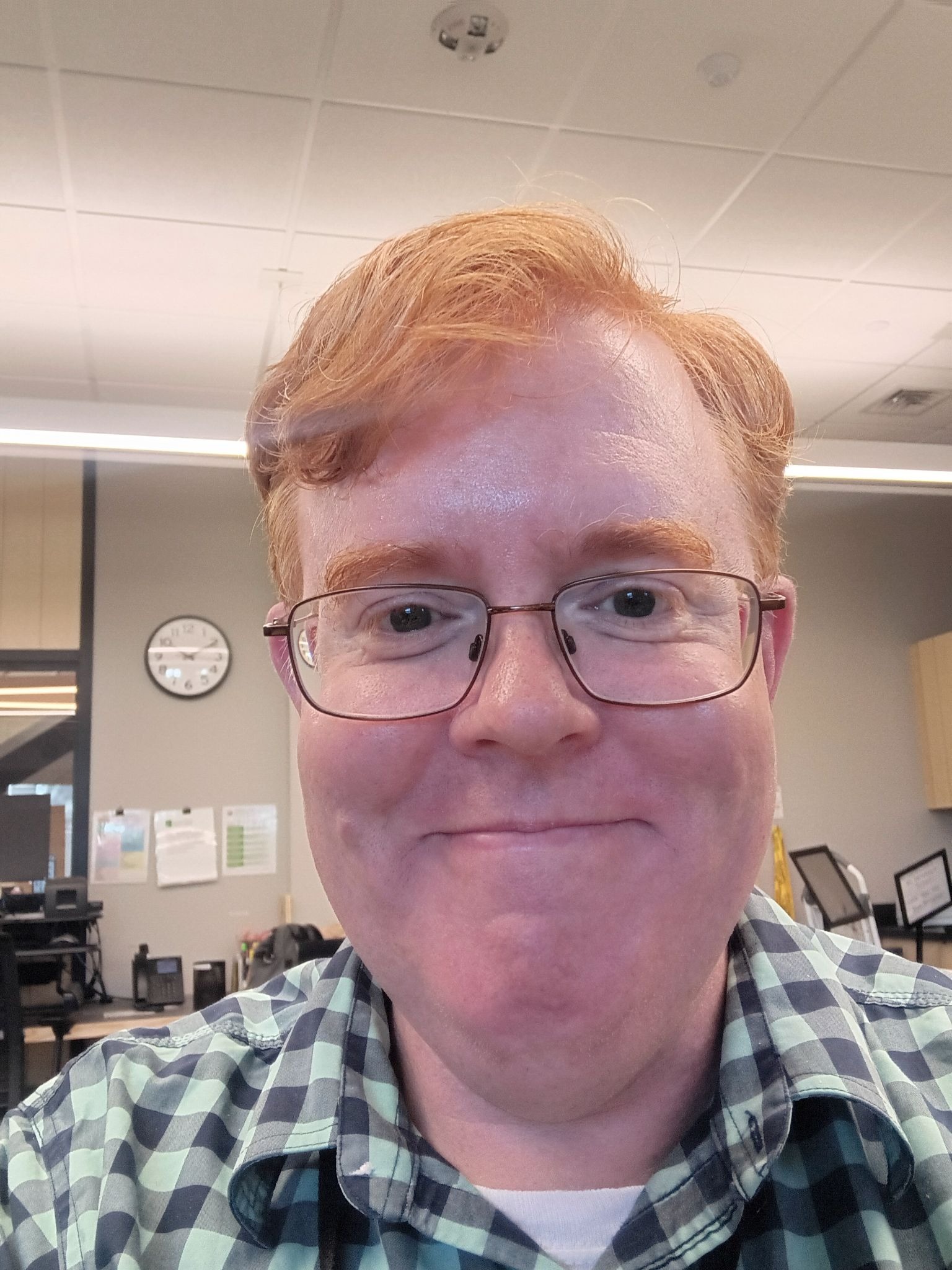
Jeremiah Rood: My name is Jeremiah Rood and I serve as head of borrower services for the Greenfield Public Library (GPL). I have worked in the Greenfield system for the past 10 years, rising through the ranks from part-time night and weekend librarian to full-time holds person to assistant head of borrower services and to my current position. I am currently working with our director to help the library draft its strategic plan.
GPL serves the community of Greenfield, Massachusetts and its surrounding towns. Greenfield recently completed construction of its first purpose-built library, which has been open for just over three years. GPL is a rural library in the western part of the state.
What is your webinar about?
Rood: The world doesn’t need more marketing spin or AI slop, but it does need more authentic connected library voices.
Let’s face it: we live in an era dominated by rapid AI content generation and algorithmic noise. Raise your hand if your library has the funds to compete in the social media landscape where views and clicks are driven by ad dollars.
(Our publicity budget is pretty much zero too.)
Traditional library marketing is hitting a wall.
Social media algorithms demand constant posting for dwindling reach, while readers are increasingly overwhelmed by digital “megaphones.” How can libraries cut through the clutter, hold community attention, and prove their ongoing value without burning out their staff?
The answer isn’t doing more — it’s cultivating slow media and authentic connection.
In Greenfield, we have spent the last year working hard to solve our ever-growing publicity problem and did so, in part, by starting four different substack newsletters.
My webinar will give you some case studies (including The Greenfield Stacks, The Runaway Book Cart, and The Haunted Pulpit) and lessons from the post-information landscape.
I hope to shift your publicity away from passive “broadcasting” to active “storytelling.”
I also hope that you will be inspired to start your own newsletter.
What is your background in marketing and storytelling? Why are you passionate about it?
I believe in the power of stories.
As librarians, we all know the power of giving that book to a patron, with the hope that this book will change their lives for the better. There is a certain electricity in the moment at the desk, when a patron looks at you with joy in their eyes about finally getting a chance to read something that matters to them.
I have worked in libraries for over 10 years at this point, and I still feel the same level of satisfaction when someone comes in, gets a library card for the first time, and walks out with a book to read. Love it.
Prior to working in the library, I spent time in the pulpit, shaping stories about faith and the challenges of living intentionally in a difficult world.
You might not know, but the church in New England, established churches, mostly are hurting units these days. They often close and leave behind massive structures that dot our landscape and speak to communities that used to be.
Same with small newspapers. After college, I worked as a newspaper reporter telling stories about little towns in New Hampshire and Maine. Those stories mattered, I hope, because they were real and showed the power of people to make change and to live their lives.
Alas, both that church and that newspaper have since, more or less, closed up shop.
I don’t think libraries will follow the same fate, but I do believe strongly that we are in a time when libraries need to be on the front lines telling their story better than they do now.
And they need to compete, not in Facebook land or on some other alternative, but through the long-form stories and understandings that are the core mission of a library.
Why did you decide to host an MLS Member Webinar?
Rood: I decided to host this webinar because I really, honestly, believe that this matters. I will talk you through three, or maybe four, strategies that I believe every library can do in their marketing. My idea is simple: cut out the noise, focus on stories, and let the rest of it go.
I hope that by talking you through the ups and downs of our experiment in Substack land, you will feel confident that you can do it too. And, probably, with a little more clarity than I had when I started.
I think it can be really intimidating to hear about someone with massive experience teaching you something, because you might be thinking, yeah, but I can’t do that.
You can.
If every library did this, then we would have a collective answer to where to find good-quality information about our institutions and why they matter.
And, we could share.
So, win.
Do you have any advice to other library workers who may be interested in learning more about Substack? Do you recommend any resources for further learning?
Rood: Getting started on Substack is pretty easy. Here’s a link to the Substack people to tell you how to do it
My webinar is less about how and more about why. I know that anyone who wants to learn how to start one can. The trick is in what to do with it.
I love reading about marketing, leadership development, and creativity. I will provide a reading list for the webinar, but for now I would like to give you my top three books to read.
- “Show Your Work” by Austin Kleon: This book provides the basic framework for what I think you ought to use Substack for. Showing people what libraries do is important; showing them why libraries matter is critical.
- “The Sirens’ Call” by Chris Hayesl: The best description of our fractured attention hellscape, which has become worse with the advent of AI slop.
- “Attensity!” by The Friends of Attention: A wonderful call to action about the importance of where you give your attention and a reminder to be cognizant of the importance of your marketing work.
Links to help showcase our efforts:
- The Greenfield Public Library Blog: Our WordPress blog, which has been revamped as a Substack showcase.
- The Wayback Greenfield Public Library Blog to show you how it has evolved over the past few months.
Our Substacks:
- The Greenfield Stacks: Our new main library newsletter, featuring upcoming events, announcements, and essential GPL updates.
- The Haunted Pulpit: Jeremiah’s asynchronous virtual book club covering dark thrillers, spooky reads, and light horror.
- The Runaway Book Cart: Tarah’s monthly, behind-the-scenes look at the inner workings and daily life of the library.
- On the Same Page: Jeremiah’s periodic series highlighting the impact GPL has on our community and exploring wider issues facing modern libraries.